
Neighborhood
Is downtown Colorado Springs a good place to live?
An honest look at downtown Colorado Springs — walkability, rents under Denver, the military-anchored economy, and who actually thrives here.
· 7 minRead
What pet deposits, pet rent, and breed rules actually look like in Colorado Springs, what Colorado law caps them at, and where downtown dogs actually go.
"Pet friendly" is the least specific phrase in apartment marketing. It can mean a building that tolerates your cat, or one with a fenced dog run and a wash station. It almost never tells you what the pet actually costs. This guide breaks down the money, the law, and the day-to-day of keeping a dog in downtown Colorado Springs — including the parts leasing brochures leave out.
Pet charges come in three shapes, and a lease can stack all three:
| Charge | What it is | National norm | Colorado cap |
|---|---|---|---|
| Pet deposit | Refundable, held against damage | ~$232 average | $300, must be refundable |
| Pet fee | One-time, non-refundable | ~$244 average | Not permitted as a "deposit" — see below |
| Pet rent | Recurring monthly charge | ~$49/month average | Greater of $35/month or 1.5% of rent |
The national norms come from the 2021 Pet-Inclusive Housing Report. The Colorado caps come from HB23-1068, which took effect January 1, 2024 — and they're the reason renting with a pet here is cheaper than in most states. On a $1,500 apartment, 1.5% of rent is $22.50, so the $35 floor governs: $35 a month is the most a landlord can charge in pet rent. Pet rent only clears $35 once rent passes about $2,333 a month.
At Avian, the published numbers sit exactly at the cap: a $300 pet deposit and $35 a month in pet rent, for up to two pets with a combined weight limit of 160 pounds. That's the whole recurring cost — there's no separate non-refundable pet fee on the fee schedule.
Two rules matter here, and both work in the renter's favor.
First, a pet deposit is legally a security deposit. CRS 38-12-102(6) defines a security deposit as any advance of money that secures performance of the lease, "regardless of its denomination." Colorado Legal Services puts it plainly: a deposit can be called a damage deposit or a pet deposit, but it's all the same thing under the law — and there is no such thing in Colorado as a non-refundable deposit.
Second, that deposit follows the security-deposit return rules. Under CRS 38-12-103, as updated by HB25-1249 effective January 1, 2026, the landlord has 30 days after move-out (60 if the lease specifies) to return the deposit with an itemized statement of anything withheld. Wrongful withholding exposes the landlord to treble damages. The same law gives you the right to request a walk-through inspection and documentation of any claimed damage — useful if a carpet dispute ever gets pinned on the dog.
One more boundary: non-refundable fees are legal in Colorado as long as they're truly fees — a charge for a service, not money held against performance. That's the difference between a one-time pet fee and a deposit. The HB23-1068 cap covers the deposit; it doesn't outlaw fees. What it does do is stop anyone from calling a held deposit "non-refundable."
This is the most misstated topic in pet-friendly housing, so it's worth being precise.
Under the Fair Housing Act and HUD's FHEO-2020-01 guidance, assistance animals — service animals trained to perform tasks, and emotional support animals that provide therapeutic support — are not pets. That has four concrete consequences:
You're still liable for damage the animal causes. And if the disability-related need isn't obvious, the provider can ask for reliable documentation — a note from a health care professional is the standard HUD names; a certificate bought from a website is explicitly not sufficient on its own. Colorado layers on its own statute: CRS 24-34-803 guarantees service-animal access in housing without extra charges, and CRS 18-13-107.3 makes intentionally misrepresenting a pet as an assistance animal a civil infraction.
Private landlords in Colorado can restrict dog breeds in a lease, and many do — Avian publishes a restricted-breed list like most professionally managed communities. No state statute prevents it for pets. (For assistance animals, see above: breed limits never apply.)
Colorado Springs itself has no breed-specific legislation. The city's animal code defines dangerous animals purely by behavior — an animal that attacks, threatens, or injures — not by breed. And since 2004, CRS 18-9-204.5(5) has barred Colorado cities and counties from passing breed bans at all.
The practical takeaway: the restriction that matters to you is the one in your lease, not the one in city code. Read the breed list before you fall in love with a floor plan.
Downtown Colorado Springs is more workable with a dog than most urban cores its size, mostly because of two places.
The Antlers Park Downtown Dog Park opened in December 2024 inside Antlers Park at 31 W Pikes Peak Avenue — a few blocks west of the Weber Street corridor. It's fully fenced with a double-gated entry, separate play areas for small and large dogs, synthetic turf, seating, and a dog water station. For an off-leash run before work, it's the answer.
Everywhere else, the leash law applies. City code 6.7.107 requires dogs to be leashed in all city parks and on all city trails — which includes Monument Valley Park, about a mile north of downtown, and its stretch of the Pikes Peak Greenway trail. That's the daily walking route for most downtown dog owners; just bring the leash.
When you want real room to run, Bear Creek Dog Park is the regional heavyweight: 25 fenced acres about three miles west, with a separate two-acre area for small and senior dogs and creek access. It's El Paso County's most-visited park site for a reason.
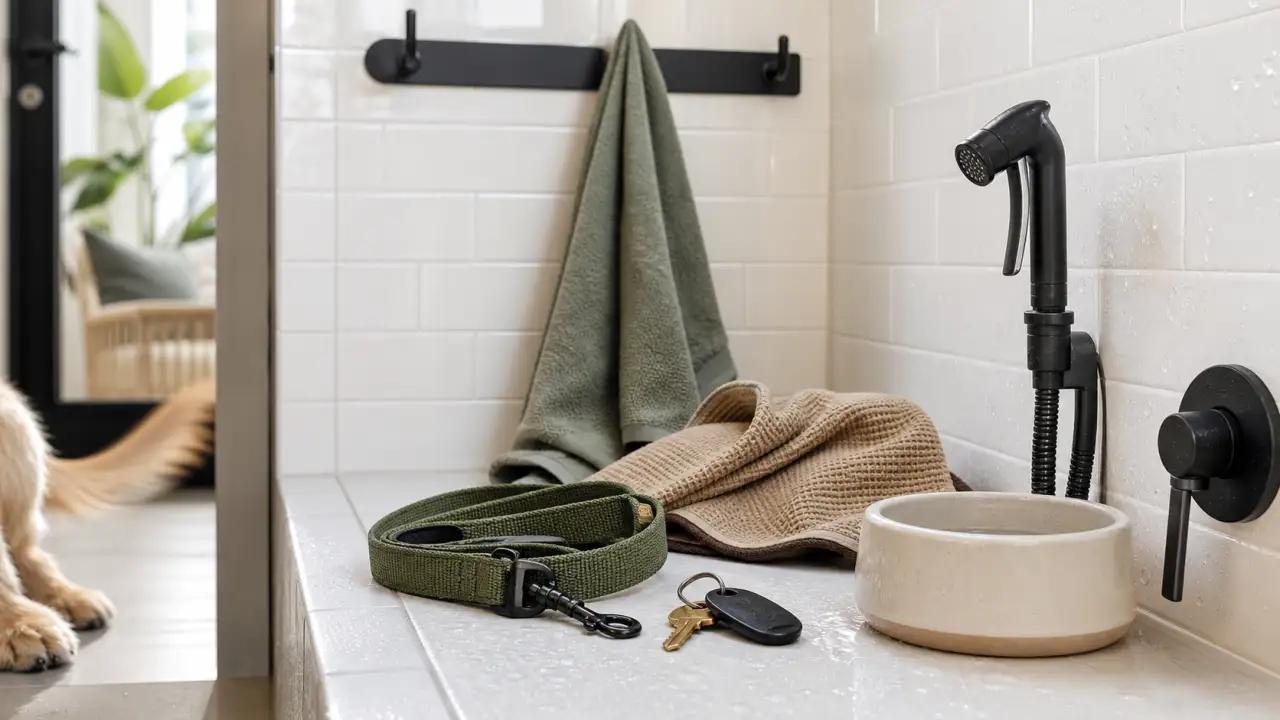
On-site infrastructure matters more than people expect, especially in winter. Avian keeps a fenced bark park on the property and a paw spa — an indoor wash station with a raised tub and dryer — which is the difference between a muddy March evening being a chore or a non-event. Sidewalk ice melt is the other winter reality downtown; it's worth wiping paws after walks regardless of where you live.
Pet policies hide in lease addenda. Before signing anywhere, get written answers to these:
If the leasing team answers all six without checking, you've found a genuinely pet-friendly building rather than a pet-tolerant one.
Avian is a pet-friendly community at 217 S Weber Street in downtown Colorado Springs, with an on-site bark park and paw spa. Our published pet terms: $300 refundable deposit, $35 monthly pet rent, up to two pets. See the floor plans or ask the leasing team about current availability.